
2026-09-16 ·
What to Expect from Weekly Service Visits in Remote McCall Locations
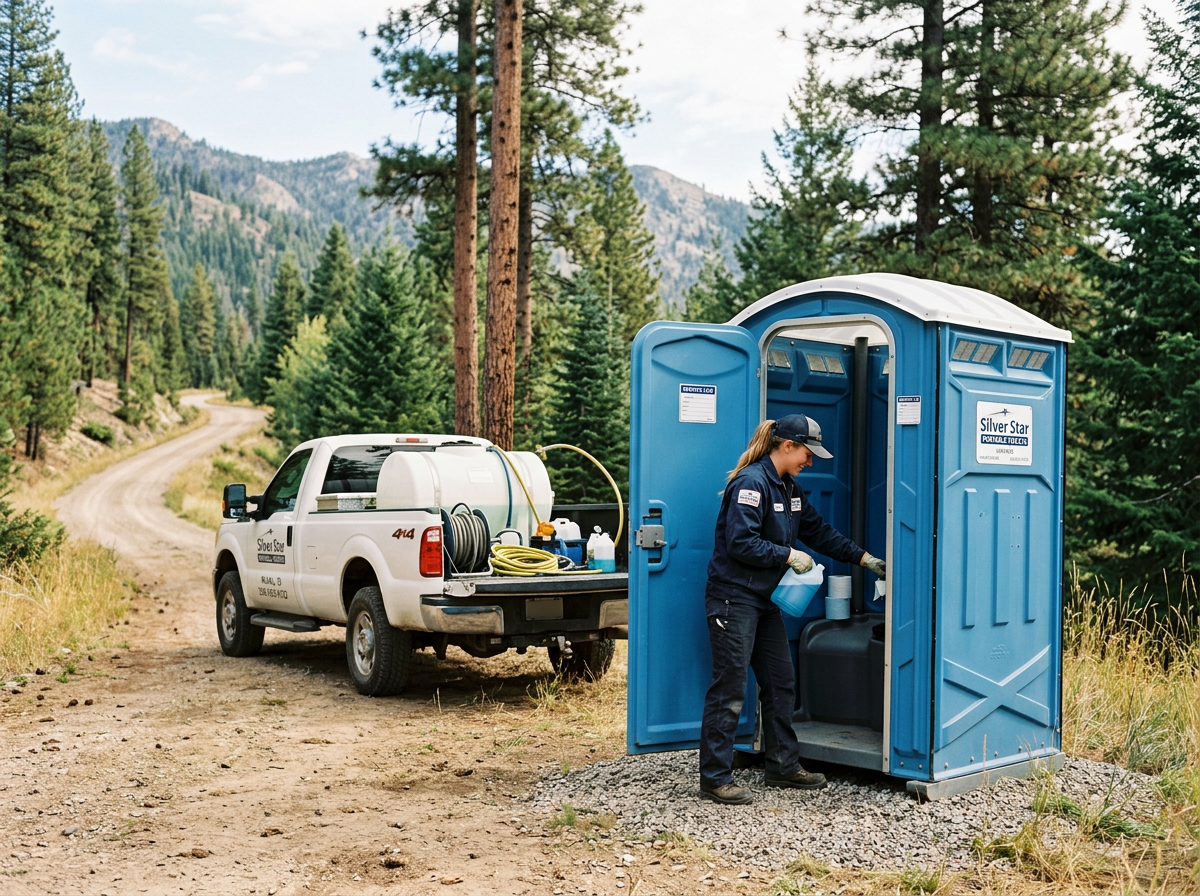
In remote McCall locations, weekly service visits center on a technician arriving from the base at 460 Krahn Ln to pump waste tanks, restock supplies, and inspect units for damage or freezing, with travel times extending due to snowed-in roads and distances to outlying areas like Donnelly or Cascade.
Accessing Remote McCall Sites
Technicians plan routes around plowed access points and known service roads that can become blocked after heavy snowfall. Travel from central McCall to harvest crews on the Snake River plain or construction rings near Boise often covers 50 miles or more one way. Crews carry extra fuel and tools because cell coverage drops in valleys and forested stretches. Service frequency stays at seven days for standard units unless event volume or crew size requires adjustment. Readers planning construction projects can review Local Rules for Porta Potty Placement at McCall Construction Sites for placement details that affect service access.
Steps in a Standard Service Visit
Upon arrival the technician first secures the unit and opens the waste compartment to pump the holding tank using a vacuum hose rated for cold-weather sludge. Next, fresh water is added to the flush reservoir and deodorizer is measured into the bowl at the correct dilution. Paper products and hand sanitizer are replenished from sealed bins kept in the service truck. The door, seat, and ventilation screen receive a quick wipe and any cracks or loose hardware are noted for later repair. Before leaving, the technician confirms the unit sits level and records the visit in the route log so the next scheduled stop aligns with the same seven-day cycle.
Winter Conditions and Equipment Checks
Freezing temperatures require extra time to thaw lines and verify that antifreeze-treated fluids have not separated. Snow accumulation on roofs and around doors is cleared to prevent water intrusion when units are reopened. Service trucks carry tire chains and winches for steep driveways that become impassable after fresh powder. Extended rentals in these conditions benefit from the guidance in Handling Waste Removal for Extended Porta Potty Rentals in Winter, which outlines extra pumping steps when waste thickens. Units near Lake Fork or other higher-elevation sites may need an additional mid-week check if daytime thaw followed by nighttime freeze creates ice blockages.
Service Differences for Luxury Restroom Trailers
Luxury restroom trailers demand level ground, a 120-volt power connection, and a freshwater hookup of at least 40 gallons per unit before service begins. Technicians first confirm shore power is live and water pressure meets the trailer's minimum flow rate. Waste tanks are pumped through larger-diameter hoses that connect to the trailer's rear manifold, then gray-water and black-water compartments are rinsed separately. Interior surfaces receive a full wipe-down, mirrors are polished, and LED lighting is tested. Because these trailers serve weddings and multi-day events, supply counts include premium soap, towel rolls, and air fresheners rather than basic packets. Details on trailer options appear on the Luxury Restroom Trailer Rental page.
Coordination with Local Crews and Events
Harvest crews on the Snake River plain and construction teams around Coeur d'Alene often request service windows that avoid peak work hours, so technicians radio ahead to confirm gate access or staging-area clearance. Event coordinators in McCall receive a same-day confirmation call listing the expected arrival window. When multiple units sit at one remote site, the crew works in sequence to finish pumping before restocking begins, keeping total on-site time under 30 minutes per standard unit. This approach keeps disruption low while still meeting the weekly cycle demanded by Idaho's short resort season.