
2026-09-16 ·
Setting Up Portable Toilets on Sloped Lots Near Brundage Mountain
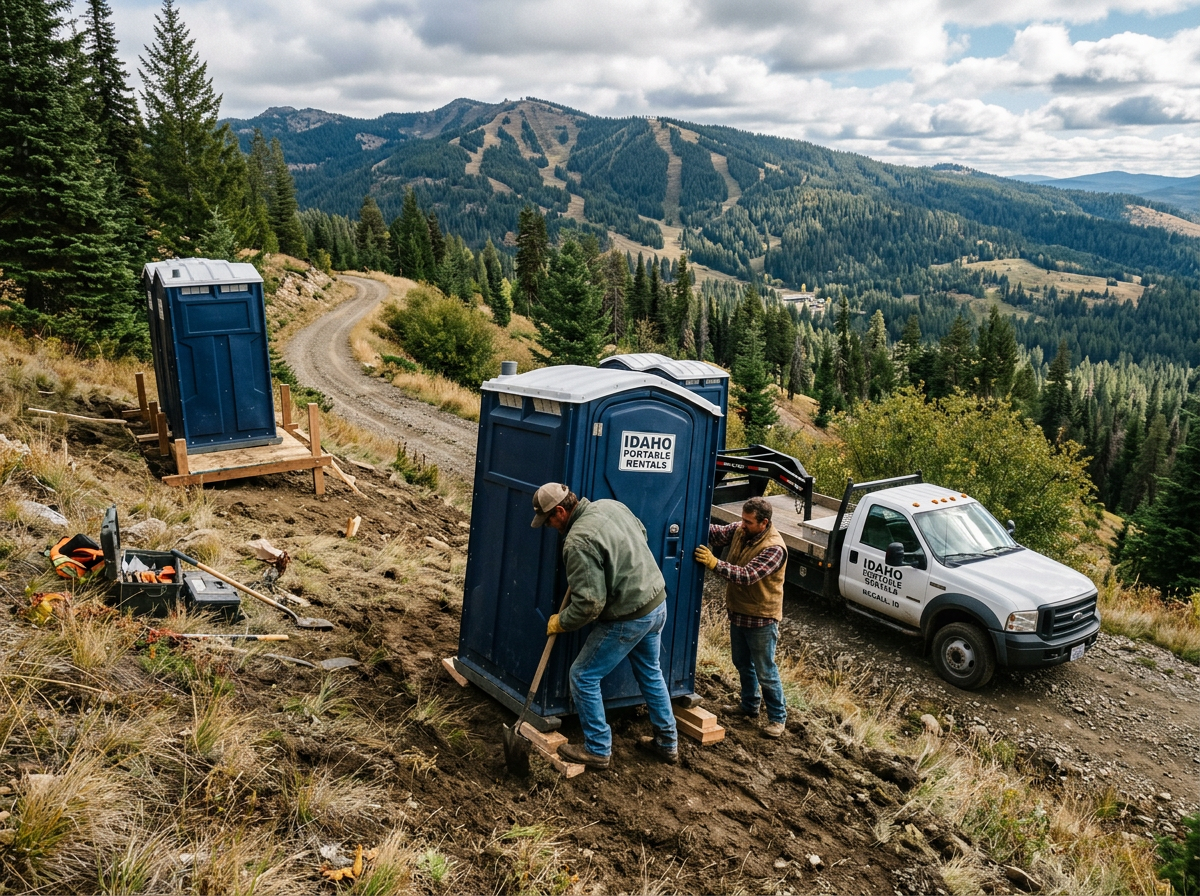
Portable toilets on sloped lots near Brundage Mountain stay stable when crews first measure the grade and then use blocking or shims to bring each unit within 2 degrees of level. This approach prevents tipping, keeps doors operating correctly, and maintains proper waste flow inside the tank. Steeper pitches common on the mountain's lower access roads require extra time to prepare the site before any unit is set.
Measuring Slope Before Placement
Crews start by walking the proposed locations with a digital level or string line to record actual degrees of incline. On Brundage Mountain lots, grades often run 8 to 15 degrees across a single trailer footprint, which exceeds safe limits for standard units. Once the measurements are recorded, teams mark the high and low corners so blocking can be cut to exact heights. This step avoids later adjustments that become difficult once the unit is on site. Snow cover can hide rocks or soft spots, so probing the ground with a rod before final placement reveals hidden hazards that could shift under weight.
Leveling Methods for Standard Units and Trailers
Standard portable toilets use pressure-treated 4x4 blocks or composite shims placed under the corners to achieve level. Luxury restroom trailers, which measure 28 to 32 feet long, require longer blocking runs and sometimes screw jacks at each axle point because their tanks hold 300 to 400 gallons of freshwater. Level ground is essential for these trailers so pumps and water heaters operate without air locks. When the slope runs lengthwise, crews set the trailer so the door end sits slightly higher than the tank end, allowing gravity to assist drainage during service. Every block is checked twice after the unit settles to confirm it has not shifted under its own weight.
Winter and Snow Considerations Near Brundage
Freezing temperatures around Brundage Mountain can lock service doors and freeze waste lines within hours if units sit on exposed slopes. Snow accumulation on the uphill side can push against the unit and create uneven pressure, so crews clear a 3-foot buffer on the high side during placement. Plowed access roads often leave a berm of hard-packed snow that must be cut back before a service truck can reach the units. Handwash stations placed on the same slope need their own blocking so sinks remain at workable height for users wearing heavy boots and gloves.
Access Routes and Service Frequency
Service trucks traveling from the McCall base at 460 Krahn Ln must navigate steep driveways that may require four-wheel drive or chains once snow falls. Units on remote Brundage lots are typically serviced every 3 to 5 days during peak ski season to prevent overflow when roads become impassable. ADA accessible units receive priority placement on the flattest available ground because their wider doors and grab bars lose effectiveness when the floor tilts. Clear paths at least 4 feet wide must remain open between units and the main trail or parking area so guests can approach safely on packed snow.
Choosing Between Standard Units and Luxury Trailers
Standard units tolerate minor slope adjustments with basic blocking, while luxury restroom trailer rental demands near-perfect level plus nearby power and water hookups. On Brundage lots without electrical service, standard units paired with separate handwash station rental often provide the more reliable option. Readers comparing options for events in the area can review comparing standard units versus luxury trailers for McCall events for additional placement details. In both cases, the final location must allow the service truck to back up within 10 feet of the unit door without parking on an incline that could cause sliding during pumping.